
Summary: Termites are hard to spot directly, but mud tubes, discarded wings, and hollow sounding wood are all reliable signs of activity. This guide explains what termites look like and the infestation signs Pacific Northwest homeowners should watch for.
Termites are easy to overlook because they rarely show themselves outright. Most of their activity happens inside wood, soil, or wall voids, which means many homeowners around Olympia and Spokane do not realize they have a problem until damage has already started to add up.
Knowing what termites look like and the signs of an infestation to watch for makes it far more likely you will catch a colony early, before it does serious damage to the structure of your home.
What Termites Look Like – Really!
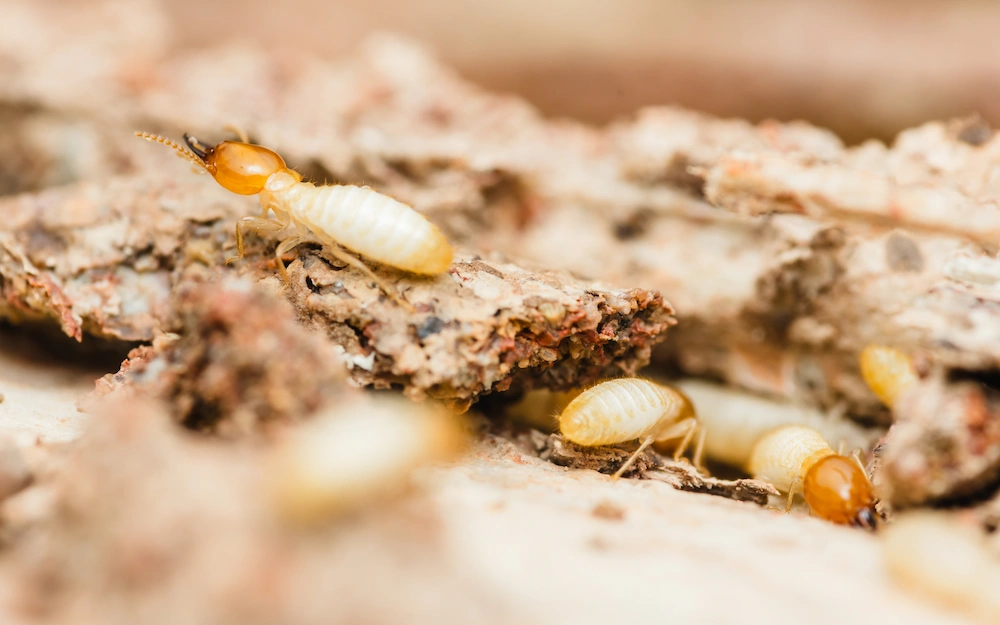
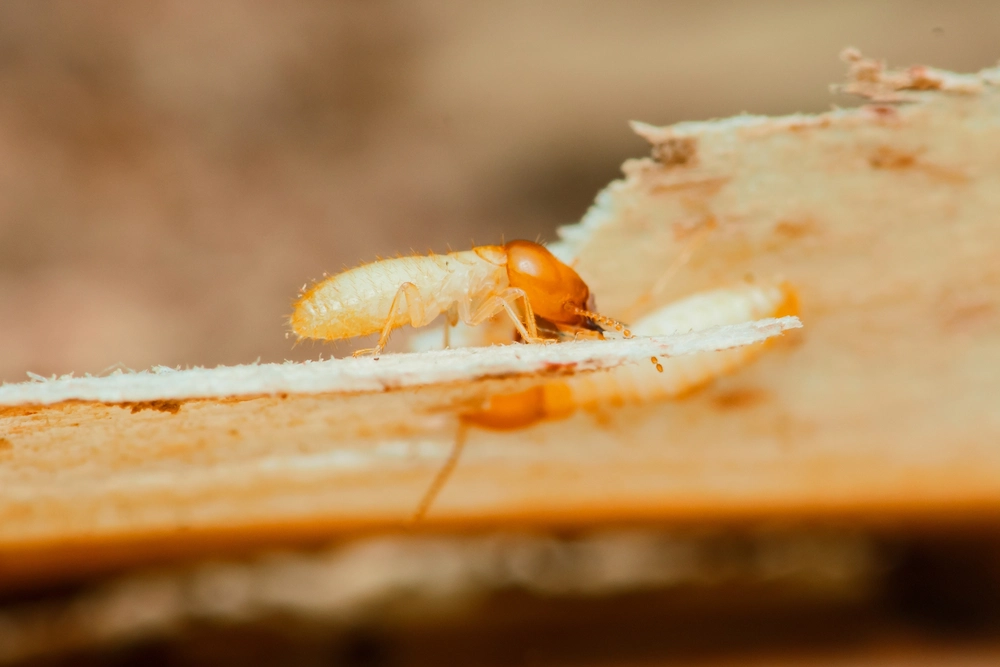
Subterranean termites, the species most common in our region, are typically pale, creamy white to light brown, and soft bodied, which is part of why they avoid the open and stay within wood or soil tunnels. Worker termites are the ones most often seen if a piece of infested wood is broken open, and they look almost translucent compared to other household insects.
Soldier termites look similar to workers but have noticeably larger, darker heads with prominent mandibles, since their role within the colony is defense rather than feeding. Finding a mix of workers and soldiers together inside a piece of damaged wood is one of the more reliable ways to confirm active termite feeding rather than old, inactive damage.
Swarmers, the reproductive termites responsible for starting new colonies, look noticeably different. They have dark bodies and two pairs of wings of equal length, which is one of the easiest ways to tell them apart from flying ants during a swarm.
- Termite wings are equal in length; ant wings are unequal, with the front pair longer.
- Termite antennae are straight; ant antennae are bent, or elbowed.
- Termites have a broad waist; ants have a distinctly pinched waist.
Mud Tubes and Hidden Damage
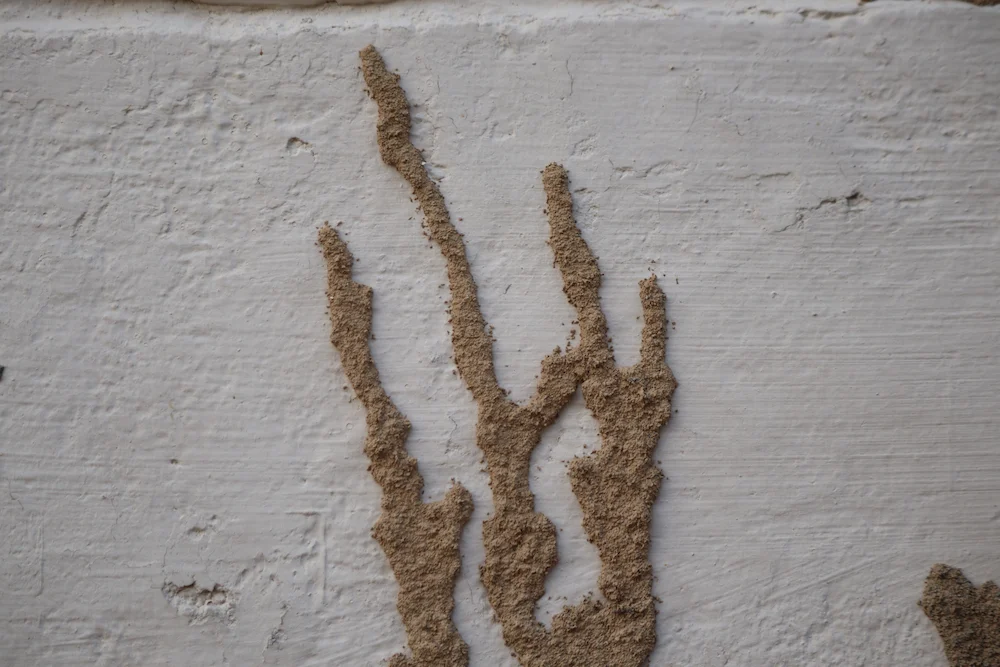
Subterranean termites build pencil width mud tubes to travel between the soil and a wood source while staying protected from open air and predators. These tubes often appear along foundation walls, crawl space piers, or exterior siding, and finding one is one of the more reliable signs that termites are active nearby. Breaking open a section of tube to check for live termites inside can help confirm activity, though an intact tube found during an inspection is reason enough to look further.
An abandoned mud tube, one that is dry, crumbling, and empty when broken open, does not necessarily mean the colony is gone. Termites will sometimes abandon a specific tube while remaining active elsewhere on the same structure, so a single empty tube is not a reliable sign that the broader problem has resolved on its own.
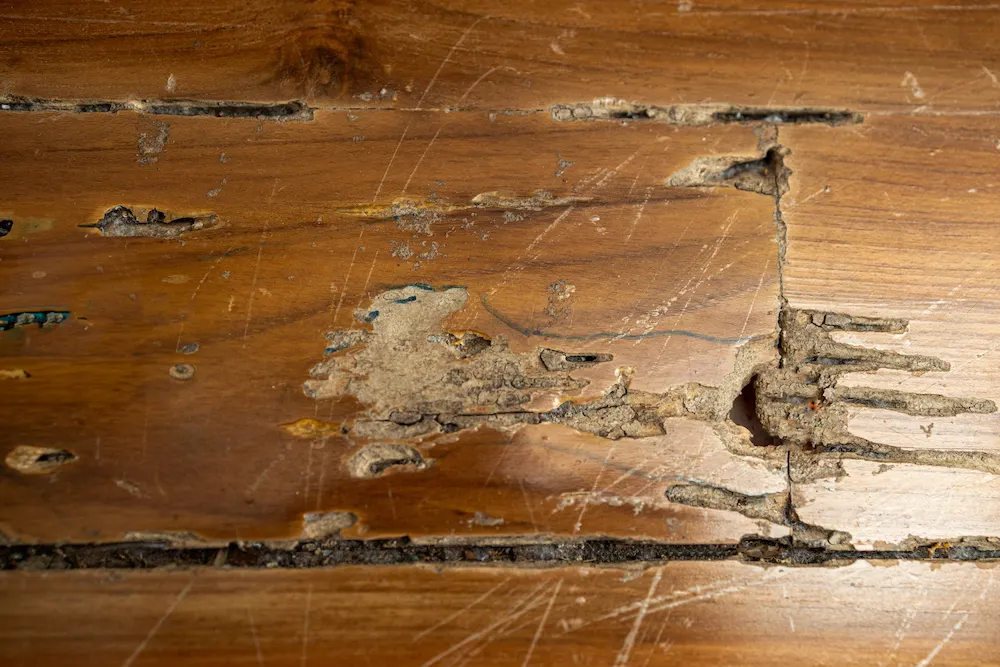
Termite damage tends to happen from the inside out, which means wood can look fine on the surface while being hollowed out underneath. Tapping on suspect wood and listening for a hollow sound, or pressing on it to check for unusual softness, can reveal damage that is not visible at a glance. Paint that looks like it is bubbling or wood that appears to be sagging slightly are both worth a closer look, since both can indicate moisture or termite activity happening beneath the surface.
Wood that has been hollowed out by termites often still shows a distinctive layered pattern along the grain when cut open, since termites tend to feed along the softer spring growth rings and leave the harder summer growth largely intact. This layered look is a strong visual confirmation of termite feeding versus other forms of wood damage like general rot.
Swarms Are a Seasonal Signal
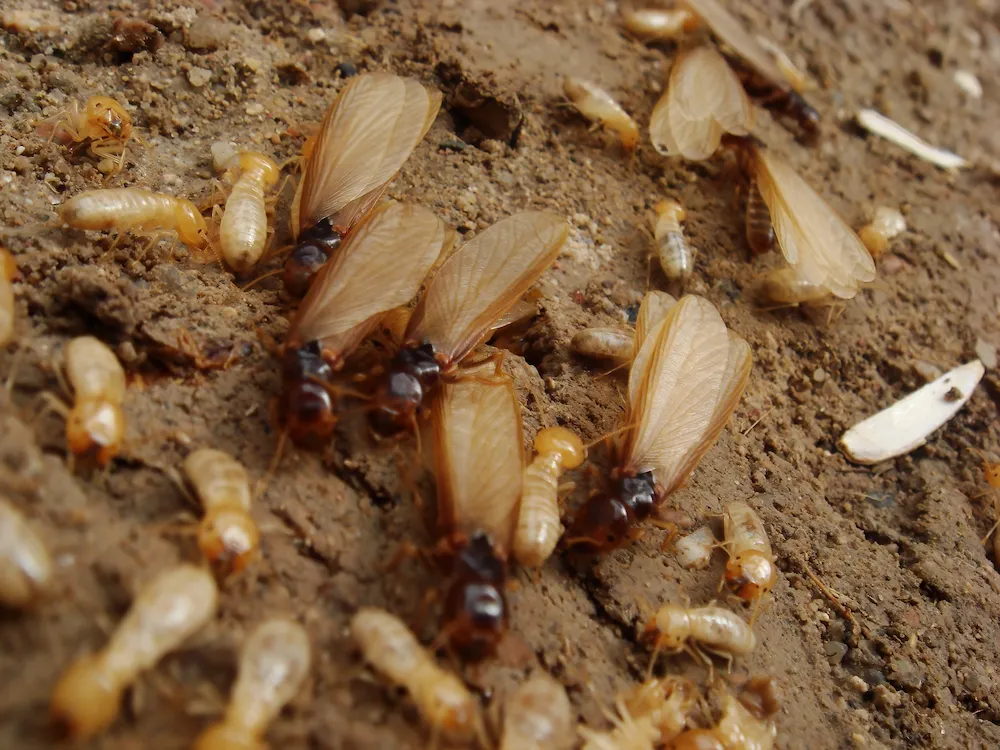
Termite swarms happen when a mature colony sends out reproductive termites to start new colonies nearby, and they tend to occur during specific times of year tied to temperature and moisture conditions. Finding discarded wings near windowsills or doors, even without seeing the termites themselves, is a strong indicator that a swarm has already happened close to your home.
Swarmers are relatively weak fliers and often shed their wings shortly after landing, which is why a small pile of what looks like tiny, uniform wings on a windowsill or in a spider web near a window is worth paying attention to even if no termites are visible nearby. Indoor swarms in particular are a strong sign that an active colony already has access to the structure itself, rather than just being present somewhere in the surrounding soil.
Our region’s consistent rainfall keeps soil moisture high for much of the year, which is exactly the condition subterranean termites need to travel and build colonies. Homes with wood to soil contact, poor crawl space drainage, or firewood stacked against the foundation, common in both Spokane and Olympia neighborhoods, tend to see more termite pressure than homes without those conditions.
What to Do if You Suspect Termites
Termites rarely resolve on their own, and by the time visible damage shows up, a colony has often been active for a while already. Most homeowners inspect a house at eye level, which is exactly where termites are least likely to be visible, so a closer look at the foundation, crawl space, and wood to soil contact points matters more than a quick glance around the yard.
If you have noticed mud tubes, discarded wings, or wood damage that fits these signs, it is worth having the situation looked at directly rather than waiting to see if it gets worse. A termite control inspection can confirm activity and outline next steps before more damage occurs.
Get an Inspection Before Damage Adds Up
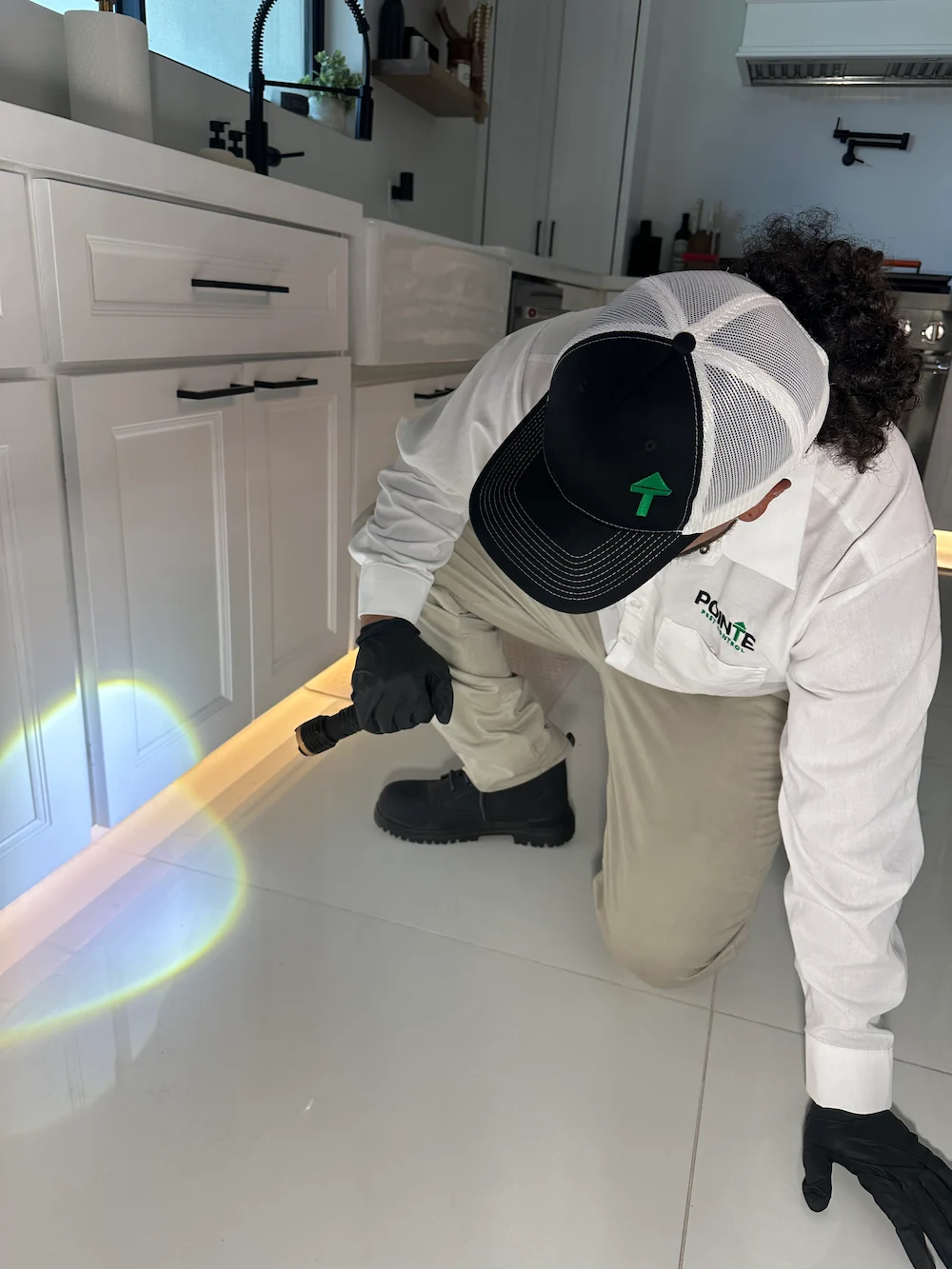
A termite colony that has been active for a season or two can cause repairs that cost far more than a routine inspection would have. Catching the signs early, rather than after wood is visibly damaged, is what keeps a termite problem manageable.
This is especially true for homes with any history of moisture issues, since a crawl space or basement that has dealt with dampness in the past is exactly the kind of environment subterranean termites look for when choosing where to establish a colony in the first place, which makes those properties worth checking more closely than a home with no such history at all.
Winter does not stop subterranean termite activity in our climate the way it might in a colder region, so putting off a closer look until spring rarely does any favors for a home that already shows one or two of the signs covered here.
If you are in the Olympia area and want a professional set of eyes on your foundation or crawl space, Pointe Pest Control’s Olympia pest control team can check for the signs covered here and confirm whether termites are already active on your property. And if you’re in the general Pacific Northwest, contact us for a free quote on our professional termite services!
Citations
Termite identification: What termites look like and key traits. (2026, February 3). Terminix. Retrieved September 14, 2026, from https://www.terminix.com/termites/identification/