
Summary: Finding bugs in your pantry during holiday baking season is common. This guide explains how to identify Indian meal moths, flour beetles, and weevils, what food to throw out, how to clean shelves properly, and how to store baking supplies to prevent a repeat infestation.
You pull the flour down for the first batch of holiday cookies and something small and brown is crawling along the rim of the bag. Or a little moth flutters out of the cupboard when you reach for the pecans. Finding bugs in your pantry right before Thanksgiving is a common November surprise in Portland and Vancouver kitchens, mostly because this is the time of year when a lot of baking supplies get bought, opened, and left on the shelf.
This guide walks through how to tell which pantry pest you have, what food should go in the trash, how to clean the shelves properly, and how to store holiday ingredients so the problem doesn’t return before the next round of baking.
Who Is Living in Your Flour, Rice, and Cereal
Most pantry pests fall into three groups: moths, small beetles, and weevils. They don’t bite people, and they don’t damage the house. What they do is breed inside dry food, sometimes for weeks before anyone notices. Knowing which one you have tells you where to look and how far the problem has likely spread.
Indian Meal Moths
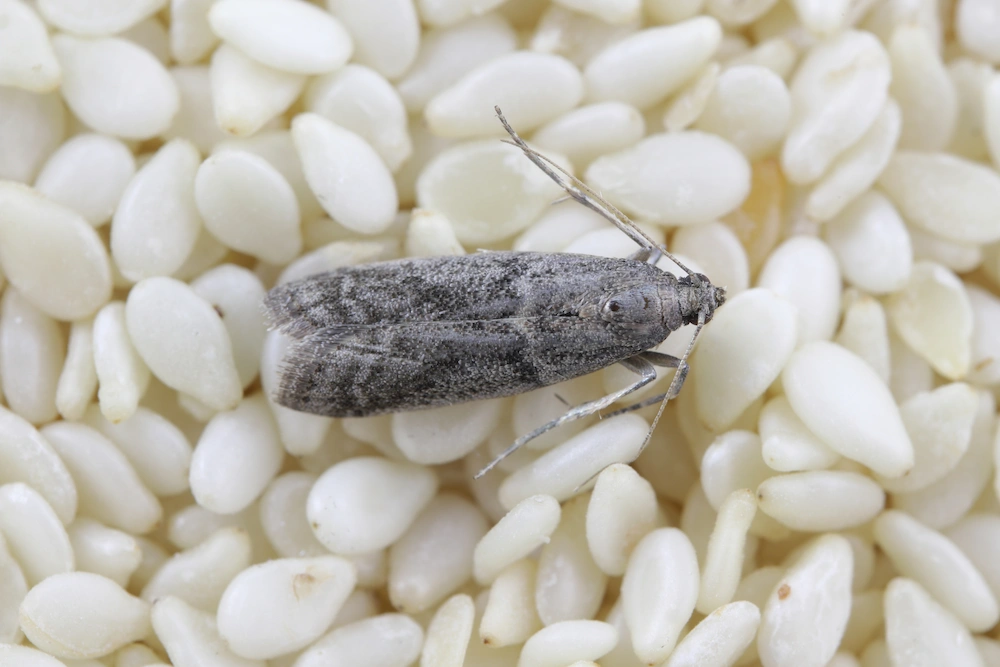
These are the most common culprits in Pacific Northwest kitchens. The adults are small moths with wings that look two-toned, pale near the body and coppery brown toward the tips. You’ll usually see them flying in a slow, zigzag pattern around the kitchen in the evening, or resting on the ceiling and upper cabinet doors.
The adults themselves don’t eat your food. The damage comes from the larvae, which are small cream-colored caterpillars with a darker head. They feed on flour, cereal, crackers, nuts, dried fruit, chocolate, birdseed, and dry pet food, and they leave behind silky webbing that clumps food together. When a larva is ready to pupate, it often crawls away from the food, so finding small cocoons in shelf corners, along the tops of walls, or in the folds of a cereal box lid is a strong clue.
Flour Beetles and Sawtoothed Grain Beetles
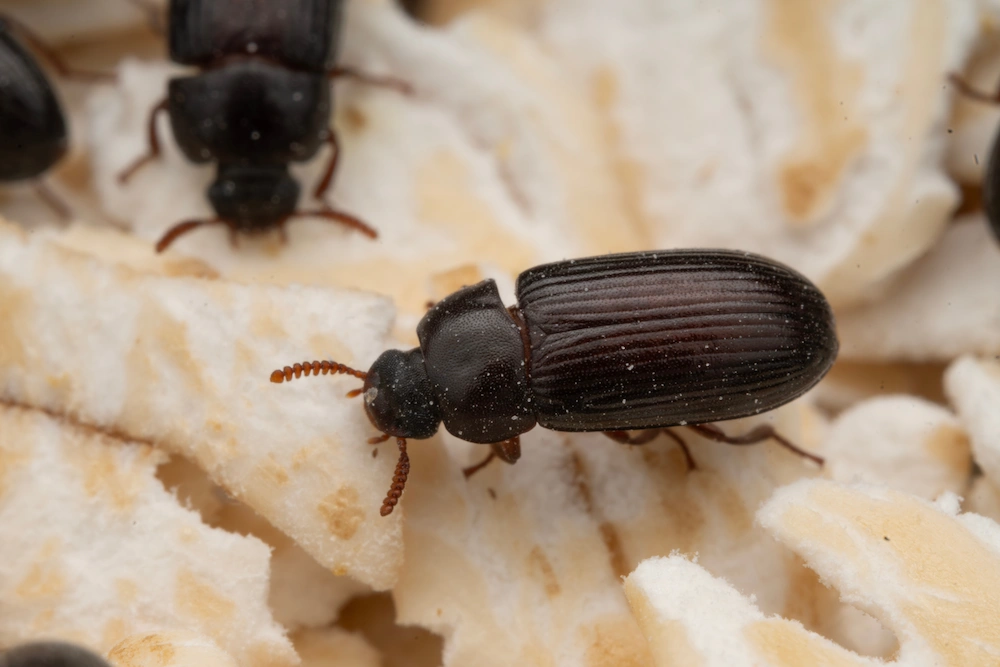
These beetles are tiny, often around an eighth of an inch long or less, and reddish brown to dark brown. Flour beetles favor flour, cake mixes, and other finely milled products, and a heavy infestation can give flour a grayish tint and a stale, musty smell. Sawtoothed grain beetles are flatter and narrower, with small tooth-like ridges along the sides of the section behind the head (you’ll need good light or a magnifier to see them).
Both kinds can slip into packages through very small gaps, and they wander. Finding a few walking across the shelf or the counter doesn’t always mean the food right next to them is the source.
Weevils
Rice and granary weevils have a distinct snout that sticks out from the front of the head. Unlike most pantry beetles, they develop inside whole kernels, so they tend to show up in rice, whole grains, dried corn, and similar items rather than in flour. Small round holes in grains are a sign adults have already chewed their way out.
Rule Out Rodents
Chewed corners on boxes, scattered crumbs behind cans, or small dark droppings on the shelf point to mice, not insects. That’s a different situation, because rodents can contaminate food with urine and droppings. Don’t sweep droppings up dry. Wear gloves, wet the area with a disinfectant first, and throw out any food the rodents could have reached.
What to Throw Out and What You Can Probably Keep
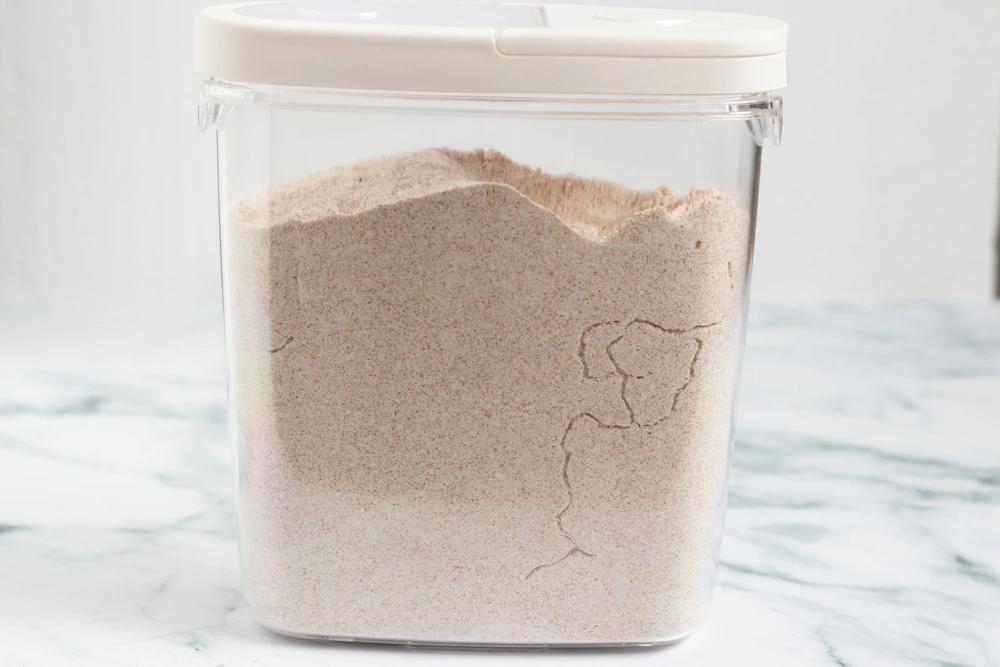
This is the part people want to rush. Go slowly, because one missed bag of cornmeal in the back corner can restart the whole thing. Pull everything off the affected shelves and the shelves next to them, then check items one at a time under good light.
Any package with live insects, larvae, webbing, cocoons, or a sour, musty smell should go. The same goes for anything with clumps that won’t break apart easily, or tiny holes in the packaging. Most people who swallow a stray pantry beetle aren’t harmed, but contaminated food isn’t worth the risk, and if anyone in your house has allergies, a sensitive stomach, or eats something and feels unwell, check in with a doctor rather than guessing.
Items That Often Get Missed
The obvious suspects are flour and cereal. The less obvious ones are where infestations hide out over the holidays. Check these carefully:
- Spices and dried herbs, especially paprika, chili powder, and cayenne
- Nuts, chocolate chips, and dried fruit bought in bulk for baking
- Dry pet food, birdseed, and grass seed stored in the garage or mudroom
- Decorative dried corn, gourds, and potpourri used in fall centerpieces
- Pancake mix, cornmeal, and dry pasta pushed to the back of the shelf
- Holiday gift baskets with crackers, cookies, or candied nuts
What About Sealed or Unaffected Food?
Unopened cans and jars with intact seals can stay. Food in glass jars or hard plastic containers with tight lids is usually fine if there are no insects inside, but look anyway.
Some cooks choose to freeze dry goods that seem clean but were stored near an infestation; several days in a freezer is widely recommended as a way to kill hidden eggs and larvae. Freezing won’t make visibly infested food appealing again, though. If you can see bugs or webbing, toss it.
Bag discarded food tightly and take it straight to an outdoor trash can. Leaving it in the kitchen bin overnight gives moths and beetles a chance to crawl right back out.
Cleaning the Pantry So They Don’t Come Back

Throwing out bad food only gets rid of the part of the problem you can see. Eggs, larvae, and loose flour dust tend to collect in the cracks where shelves meet the walls, under shelf liners, and in the hinges of cabinet doors. A careful cleaning takes an hour or two and is worth the time.
Start by vacuuming every surface with a crevice tool, paying close attention to corners, shelf supports, shelf-pin holes, and the gap between the cabinet face frame and the shelves. Pull up shelf liners and replace them, or skip liners for a while so you can see what’s going on. Empty the vacuum canister or bag outside when you’re done.
Next, wipe shelves down with hot, soapy water and let them dry completely. Skip bug sprays on food shelves. Household insecticides aren’t meant for surfaces where food is stored, and they don’t reach eggs hidden inside food packages anyway.
Look Beyond the Pantry
Indian meal moth larvae can travel quite a way from where they fed before they pupate. Check the ceiling above the pantry, the tops of upper cabinets, the underside of shelves, and the inside of nearby drawers for small silk cocoons. Look at the toaster, the area under the stove, and anywhere crumbs collect.
Pheromone moth traps can help you see whether adult moths are still around after cleaning. Keep in mind that they only catch males and won’t solve an infestation alone. If your traps keep catching moths a few weeks after a thorough cleanout, there’s still a food source somewhere in the house.
Storing Holiday Baking Supplies the Smart Way

The holidays create the perfect setup for pantry pests. People stock up on flour, sugar, nuts, and chocolate in early November, open several bags at once, and then use a little at a time through New Year’s. Half-used bags rolled shut with a clip don’t stop beetles or moth larvae.
Containers Matter More Than Anything Else
Move dry goods into glass jars, metal canisters, or thick plastic containers with tight-fitting lids. Pantry pest larvae can chew through thin plastic bags and cardboard, so the original packaging isn’t much of a barrier. Clear containers also let you spot trouble without opening anything.
A few other habits help a lot through the baking season:
- Buy flour, nuts, and dried fruit in amounts you’ll realistically use in a month or two.
- Inspect packages at the store and again at home, and skip anything torn or crushed.
- Use the oldest supplies first, and write the purchase date on containers.
- Store pet food and birdseed in sealed bins, away from the kitchen if possible.
- Wipe up spilled flour and sugar from shelves right away.
Plan Around the Busy Weeks
Before guests arrive and the baking ramps up, set aside twenty minutes to go through the pantry. Check the backs of shelves, toss anything stale, and transfer newly opened bags into containers right away. After the holidays, do one more pass before the leftovers get pushed to the back and forgotten until spring.
If you keep extra holiday food in a garage, basement, or crawl space storage area, those spots deserve a look too. They’re cooler, often damper, and checked less often, which makes them a common source of repeat infestations as well as a magnet for mice looking for shelter from the November rain.
Keeping Holiday Kitchens Clear in Portland, Salem, and Vancouver
Finding bugs in your pantry is frustrating, but it’s usually a solvable problem. Identify the pest, throw out anything infested, clean shelves and corners thoroughly, and keep dry goods in sealed containers. Those steps take care of most pantry infestations, especially when you catch them early in the season.
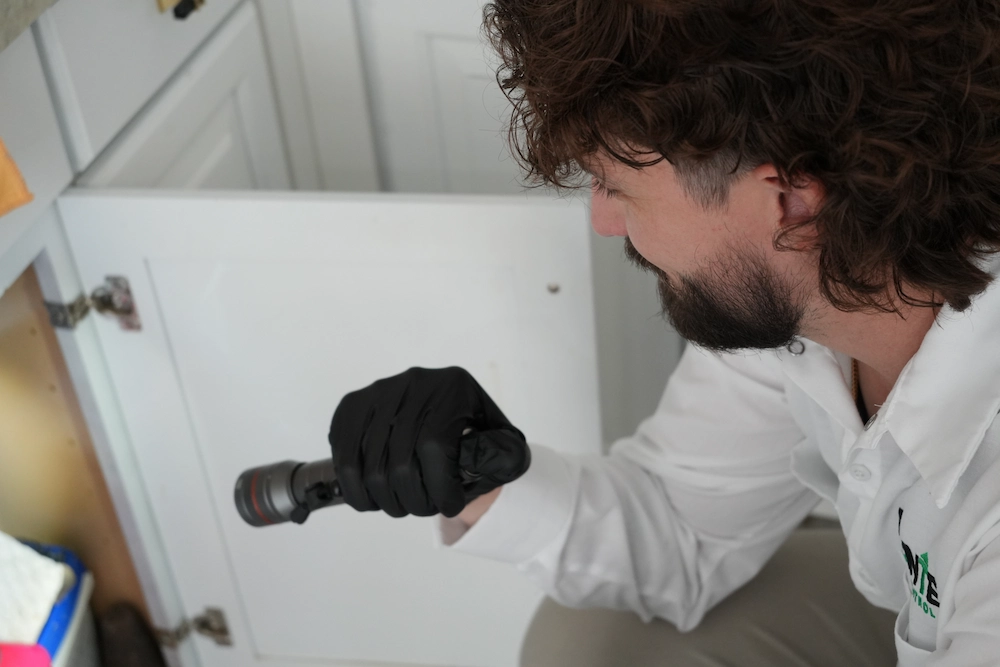
When pests keep coming back after a full cleanout, or you’re seeing signs of mice along with the bugs, it may be time for a second set of eyes. Our residential pest control services start with a full inspection of the interior and perimeter and cover kitchens, basements, and crawl spaces. Homeowners in Hillsboro, Salem, and Vancouver can reach the team behind our pest control in Portland for a free, no-pressure assessment before the holiday baking really gets going.
For a free quote on our effective pest control services, contact us today!
Citations
Van Tassell, H. (2026, June 27). What to do if you find bugs in flour or other pantry items. The Lange Law Firm. Available at https://www.makefoodsafe.com/what-to-do-if-you-find-bugs-in-flour-or-other-pantry-items/ (Accessed on November 11, 2026).