
Summary: Spiders climb walls using tiny hair tufts and claws on their feet, with a silk dragline as a safety line. This guide explains why they head up for shelter, prey, and web anchors, and how Western Washington homeowners can make walls less inviting.
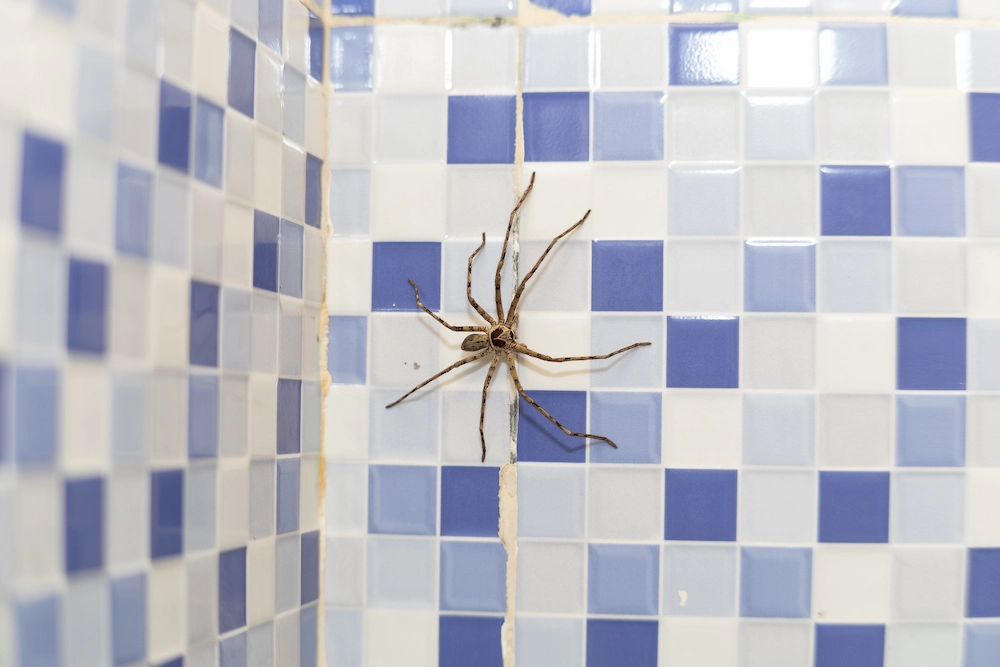
You flip on the bathroom light and there it is, parked high on the wall a few inches below the ceiling, not moving. Spiders seem to prefer walls and ceilings over the floor, and once the fall rains settle over Olympia and Tumwater, a lot of homeowners start spotting them up there more often.
So why do spiders climb walls, and how do they pull it off without falling? This guide covers the clever gear on a spider’s feet, the practical reasons they head for high ground, and a few simple changes that make your walls far less useful to them.
How a Spider Walks Straight Up a Wall
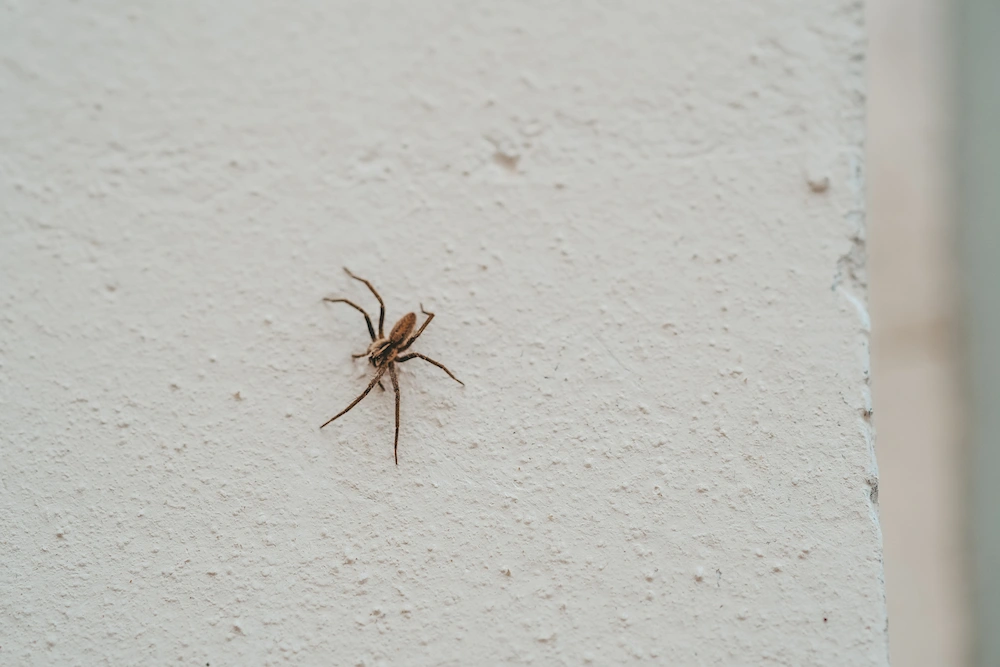
Spiders don’t use glue or suction cups. Many species have dense tufts of tiny hairs at the tips of their feet, often called claw tufts or scopulae. Each of those hairs splits into many even finer branches, and all of that close contact with a surface creates enough molecular attraction to hold the spider’s weight, even upside down on a ceiling. Geckos stick to walls using the same basic principle, just on a much larger scale.
Walls also aren’t as smooth as they look. Painted drywall, wood trim, and textured ceilings are covered in tiny bumps and ridges. The small claws on a spider’s feet hook onto those irregularities while the hairs handle the rest.
The Safety Line Most People Never Notice
As a spider moves, it often trails a thin strand of silk called a dragline and fastens it to the surface every so often. If it slips, or needs to drop away from a threat, that line catches it. The spider can then climb right back up the same thread, which is why you sometimes see one lowering itself from the ceiling like it’s on a string.
Why Some Spiders End Up Stuck in the Tub
Not every spider is an equally good climber. Hunting spiders, like jumping spiders and sac spiders, tend to have well-developed claw tufts and can walk up a window without much trouble. Giant house spiders, which are common across the Pacific Northwest, lack those tufts and rely on their claws instead. That’s usually how one ends up in a bathtub or sink: it wandered in and couldn’t get a grip on the slick sides to climb back out.
What Spiders Gain by Heading Up
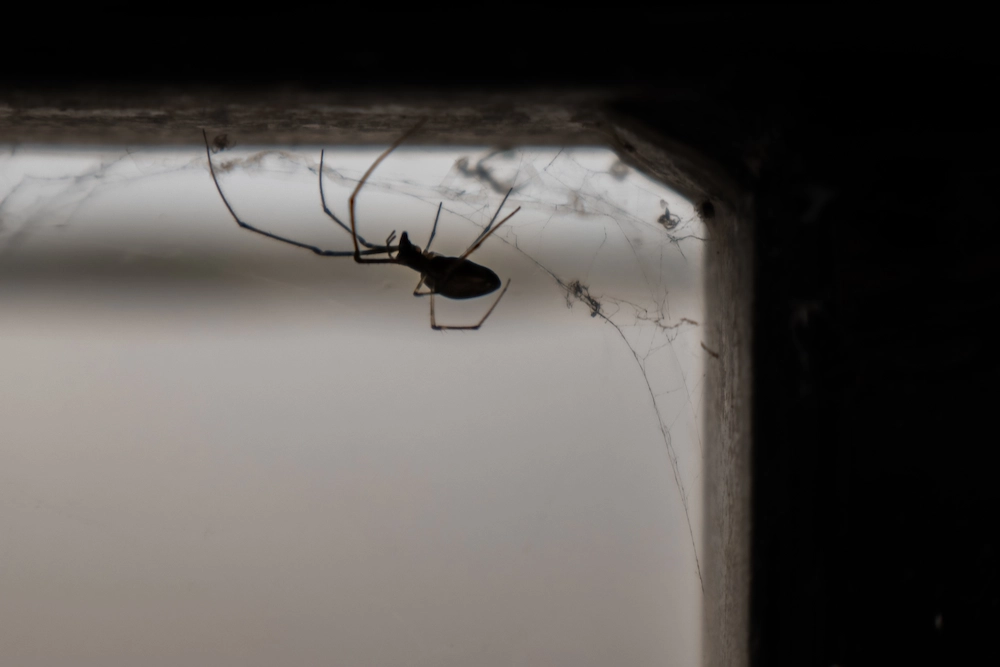
Climbing takes effort, so spiders aren’t doing it for fun. Height pays off in a few practical ways, and most wall sightings come down to one of them.
Shelter Away From Feet, Brooms, and Predators
A spider on the floor sits in the path of vacuums, pets, and people. Upper corners, the gap behind crown molding, the top of a window frame, and the space behind a hanging picture all get disturbed far less. For a small animal that wants to stay hidden during the day, those quiet edges are about as safe as a house gets.
Outside, the same logic plays out under eaves, behind gutters, and in the corners of covered porches. These spots stay drier during a long western Washington rain, which matters to a spider waiting out bad weather.
Better Hunting Near Lights and Windows
Spiders go where their food goes, and flying insects gather near light. Moths, gnats, and flies drift toward porch lights at night and bump around windows during the day. A spider parked beside a fixture or window frame is sitting right in the traffic lane, so if you keep finding one in the same lit corner, that’s probably where the insects are too.
Anchor Points for a Web
Web-building spiders need solid places to attach their silk. A corner where two walls meet the ceiling gives them three surfaces to work with, which is exactly why cobwebs collect up high. Cellar spiders, the long-legged ones with tiny bodies, are especially fond of these spots and will hang in a loose, messy web for weeks if nobody knocks it down.
Exterior Walls as a Route Inside
Plenty of the spiders on your interior walls started outside. Siding, downspouts, and window trim give them an easy path up toward soffits, attic vents, and gaps around window frames, where a small opening is all it takes. Homes with shrubs or ivy pressed against the siding give them cover the whole way up.
Fall Wandering Season
From late summer into fall, adult male giant house spiders leave their webs to look for mates. They cover a lot of ground and cross walls, floors, and baseboards along the way. That’s a big part of why spiders seem to appear out of nowhere in September and October, even though most of these wanderers are only passing through.
Where you spot a spider says something too. One sitting high and still in a corner is usually a web builder, or a hunter waiting for prey to wander close. One sprinting along the baseboard on an October evening is more likely a roaming male, and it may find its own way back out.
Making Your Walls Less Useful to Spiders
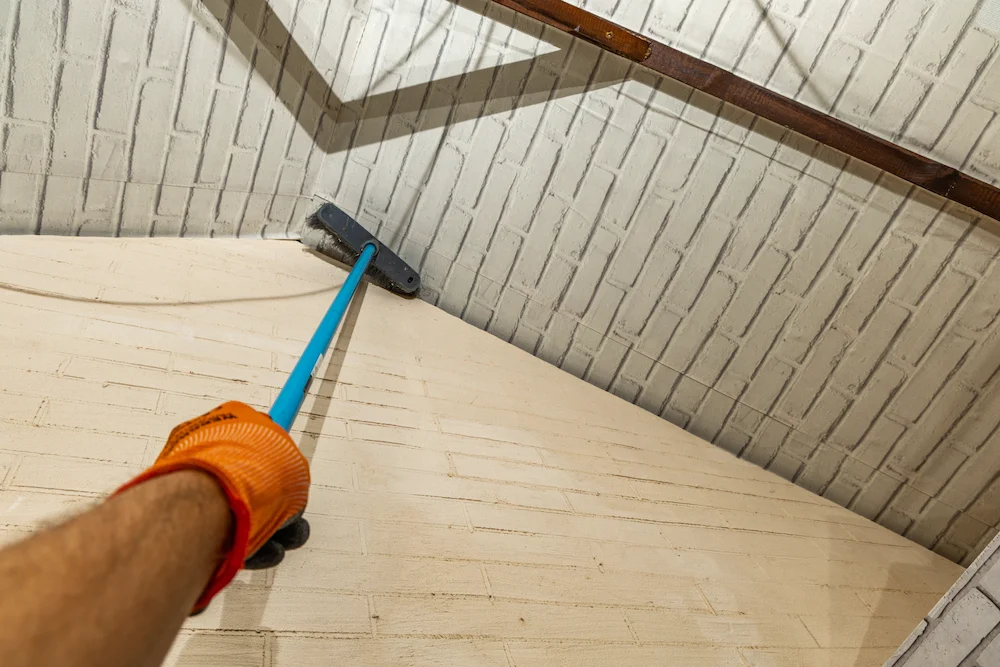
You can’t change how a spider’s feet work, but you can take away the reasons it bothers to climb. A few habits make a noticeable difference, especially before the wettest months arrive.
- Vacuum webs and egg sacs from ceiling corners, window frames, and light fixtures every couple of weeks.
- Swap the bulbs by your doors for yellow bug lights, which tend to draw fewer flying insects.
- Seal gaps around window frames, siding trim, and utility lines where spiders and insects slip indoors.
- Trim shrubs and branches so they don’t touch the siding, and keep firewood stacked well away from the house.
- Knock down webs under eaves and porch ceilings with a long-handled broom.
The bigger lever is the insects. Spiders stick around when food keeps showing up, so cutting down the bugs drawn to your lights and damp corners can reduce how many spiders bother with your walls at all. Our residential spider control pairs interior treatment with an exterior barrier and web removal around the outside of the home, which can help keep both spiders and their prey in check.
If you’d rather not haul out a ladder, that’s fair. High corners in two-story entryways and vaulted living rooms are hard to reach, and they’re often the exact spots where webs pile up season after season.
Fewer Spiders Overhead in Olympia and Tumwater
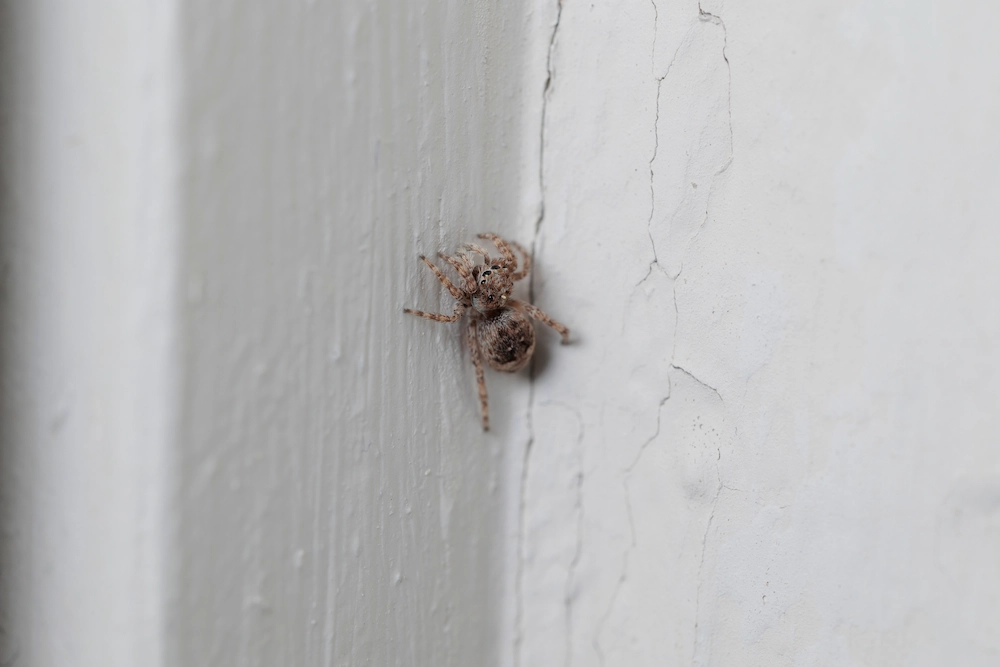
So, why do spiders climb walls? Mostly because height gives them safe hiding spots, easy access to prey near lights and windows, and solid anchors for their webs. Their feet are built for the job, with fine hair tufts and tiny claws that grip surfaces we assume are smooth, plus a silk safety line in case they slip.
If you’re seeing more of them on the walls as the weather turns, the technicians who handle spider control in Olympia can walk your home inside and out and point out what’s drawing them in. A visit before the heavy rains really set in can make the rest of the season a lot quieter.
Contact us for a free quote on our dependable PNW spider control services today!
Citations
Dumé, I. (2004, April 20). Spiders get a grip. Physics World. Available at https://physicsworld.com/a/spiders-get-a-grip/ (Accessed on October 8, 2026).